




Nursing occupations have consistently remained among Australia's most in-demand professions and continue to receive high priority on the Medium and Long-term Strategic Skills List (MLTSSL). This presents tremendous opportunities for those aspiring to build a future in Australia. However, before thinking about permanent residency, you need to understand that your entire migration plan can fall apart if you have not completed an ANMAC Skills Assessment — the mandatory skills assessment process for nursing occupations.
So, why does ANMAC Skills Assessment have such a significant impact on your future? Let's explore it with Skill Direct.
1. ANMAC Skills Assessment Overview
Before starting your ANMAC skills assessmentapplication, it is important to understand who ANMACis, the role it plays, and why this assessment is almost mandatory for anyone planning to work or migrate to Australia as a nurse.
1.1 Who Is ANMAC?
ANMAC (The Australian Nursing and Midwifery Accreditation Council) is the assessing authority approved by the Australian Government to assess the skills and qualifications of applicants in Nursing and Midwifery. ANMAC ensures that practitioners meet the required professional standards, educational qualifications, and competencies necessary to work safely and effectively within Australia's healthcare system.
1.2 Why Can't You Migrate Without an ANMAC skills assessment ?
ANMAC Skills Assessment is one of the essential requirements if you intend to apply for skilled migration as a nurse. The outcome issued by ANMAC enables the Department of Home Affairs to determine whether your qualifications and professional background meet Australia's labour market needs through several key criteria:
- Whether your qualifications satisfy Australian professional standards for nursing practice.
- Whether your education and work experience are comparable to the requirements of nursing occupations under the Australian Qualifications Framework (AQF).
- Whether your practical competencies are sufficient to maintain the safety and quality standards expected within Australia's healthcare system.
Receiving a outcome positivemeans that you have successfully passed one of the most critical stages of the migration process. This allows you to confidently move forward with subsequent steps, such as lodging an Expression of Interest (EOI) for skilled migration.
ANMAC assesses the following groups of applicants:
- Nurses and midwives registered overseaswho hold recognised qualifications.
- Nurses and midwives already registered in Australia or New Zealand.
- Healthcare workers with qualifications or experience in direct patient care roles.
It is fair to say that ANMAC Skills Assessment serves as your gateway to both professional development and long-term settlement opportunities in Australia. Without this step, your migration pathway will almost certainly come to a halt.
You should also note that certain matters fall outside ANMAC's responsibilities, including:
- Assisting with finding nursing employment in Australia.
- Providing advice regarding visa applications or visa status.
- Offering information relating to employment rights, workplace conditions, or industrial relations.
- Delivering educational or professional training programs.
These matters do not form part of ANMAC's assessment services. If you require assistance in these areas, you should contact the NMBA (Nursing and Midwifery Board of Australia) which regulates nursing registration and professional practice in Australia.
1.3 ANMAC Skills Assessment Criteria
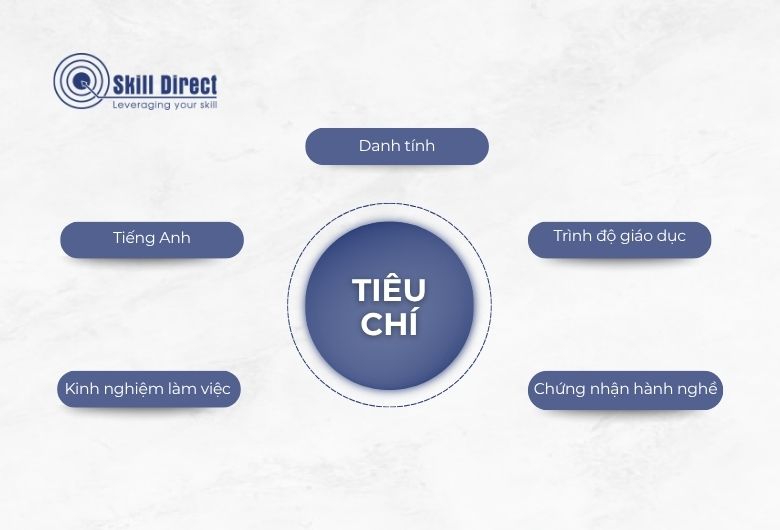
Before lodging your application, you should understand the criteria ANMAC uses to assess applicants. Being familiar with these requirements helps minimise errors and ensures better preparation. The assessment criteria include:
- Identity
- Education
- Work experience
- Registration and certification
- English language proficiency
If you fail to satisfy one or more of these requirements, ANMAC may determine that you are not suitable for permanent migration under nursing or midwifery occupations. While ANMAC will identify which requirements have not been met, it does not provide guidance on how to improve your application for migration purposes. This is why thorough preparation from the beginning or seeking professional support from migration specialists like Skill Direct is extremely important to minimise delays, reduce mistakes, and maximise your chances of achieving a positive outcome.
2. ANMAC Skills Assessment Process for Nurses
ANMAC currently offers three assessment pathways: Full Skills Assessment, Modified Skills Assessment and GradReady Skills Assessment. Each pathway is designed for different applicant groups depending on their qualifications, registration status, and migration objectives. However, within this article, Skill Direct will focus on the Full Skills Assessment, which is the most common pathway for overseas-qualified nurses intending to work and migrate to Australia. Full Skills Assessment là chương trình phổ biến và phù hợp nhất dành cho ứng viên là lao động nước ngoài muốn sang Úc làm việc và định cư theo nhóm nghề y tá.
2.1 Documents Required
To ensure your ANMAC Skills Assessment application proceeds smoothly, all uploaded documents and images must comply with ANMAC's quality requirements. Failure to provide compliant documentation may delay your assessment and significantly impact your migration timeline.
General document requirements:
- Colour copies of original documents (certified copies are not accepted).
- Documents must be scanned at a minimum resolution of 600 dpi.
- All files must be submitted in PDF format. .pdf
Important note: If any documents are not in English (for example, Vietnamese), you must provide both the original documents and English translations completed by a NAATI certified translator.
Documents you need to prepare
- Identity documents: You must provide a colour copy of your passport, together with an additional identity document such as your birth certificate or driver's licence.
- Educational Qualifications: You must submit qualification certificates for all nursing or midwifery programs relevant to your registration, along with official academic transcripts. You are also required to demonstrate the number of theoretical and clinical hours completed during your studies. If your educational institution cannot provide confirmation of these hours, ANMAC allows you to submit copies of course syllabi sent directly from the institution to verification@anmac.org.au.
- English language proficiency: You may submit approved English test results such as IELTS, PTE hoặc Cambridge. English proficiency is an essential requirement demonstrating your ability to practise effectively in professional healthcare environments.
- Registration documents: ANMAC requires registration certificates or Certificates of Good Standing issued by the nursing or midwifery regulatory authority in the country where you are licensed. These documents confirm that you are appropriately registered, have no professional misconduct concerns, and remain eligible to practise.
- Work Experience: You must provide employer reference letters confirming at least three months of paid employment within the previous five years.The references must outline your routine nursing or midwifery duties to enable ANMAC to assess whether your experience aligns with your nominated ANZSCO occupation. In addition, applicants must demonstrate at least 1,800 hours of paid practice as a registered nurse, applicable from 1/1/2017.
- Licensing examinations: If you completed your nursing education outside Canada, Hong Kong, Ireland, Singapore, Spain, the United Kingdom, or the United States, you must provide evidence of successfully completing an approved licensing examination. Accepted examinations include: NCLEX-RN (United States/Canada), OSCE as part of the UK NMC Test of Competence, equivalent examinations or bridging programs recognised by the relevant authorities. These examinations help ANMAC determine whether you meet Australian professional standards.
- Employment references: Reference letters must be printed on official company letterhead and include the organisation's address, telephone number, email address, and website. The letters should confirm your employment period, position title, daily responsibilities, and be signed by your direct supervisor or manager.

2.2 Application Process and Fees
The ANMAC Skills Assessment process is conducted entirely online and does not involve additional interviews.
Step 1 Check your eligibility: This preliminary step helps ensure that you apply under the correct pathway and avoid immediate refusal.
Step 2 Identify the required documents: Review ANMAC's guidelines to determine exactly which documents you need to provide.
Step 3 Prepare your application: This is arguably the most critical stage, as ANMAC's assessment is based solely on the evidence submitted.
Step 4 Create an account and pay the application fee: Once your documents are ready, you can create an account through ANMAC's online portal, complete your details, and pay the assessment fee. Payment confirmation is issued immediately, allowing you to proceed to submission.
Step 5 Upload your documents: Upload scanned copies of all required documents in accordance with ANMAC's formatting requirements.
Step 6 Wait for the assessment outcome:After successful submission, ANMAC will review your qualifications, academic transcripts, and employment experience. The average processing time is approximately six weeks, although applications with complete and well-organised documentation may be finalised sooner. Your outcome will be sent to the email address registered with ANMAC.
The current ANMAC Skills Assessment fee is approximately 595 AUD. Please note that fees may change over time. Therefore, applicants should always verify the latest fees directly through ANMAC's official website before lodging their applications.
3. Understanding the Difference Between Enrolled Nurses and Registered Nurses
When applying for ANMAC Skills Assessment, it is important to understand the distinction between Enrolled Nurse (EN) and Registered Nurse (RN), as each occupation has different qualification requirements, scopes of practice, and occupation lists.
| Registered Nurse | Enrolled Nurse | |
| Minimum qualification | Bachelor's degree | Diploma qualification |
| Occupation list | Medium and Long-term Strategic Skills List (MLTSSL) | Short-term Skilled Occupation List |
| Scope of practice | Provides comprehensive care, develops care plans, and makes complex clinical decisions | Delivers fundamental nursing care under the supervision of a Registered Nurse |
These are the two most common nursing categories assessed by ANMAC. However, if your goal is long-term migration and career progression in Australia, pursuing registration as a Registered Nurseis generally recommended. Demand for Registered Nurses remains consistently strong, offering broader employment opportunities and greater stability compared with Enrolled Nurses.
4. Important Tips to Improve Your Chances of Success
Skill Direct understands that preparing an ANMAC skills assessment ANMAC Skills Assessment application requires substantial effort in gathering evidence relating to your education, employment experience, and professional duties.To help improve your chances of a favourable assessment outcome, consider the following recommendations:
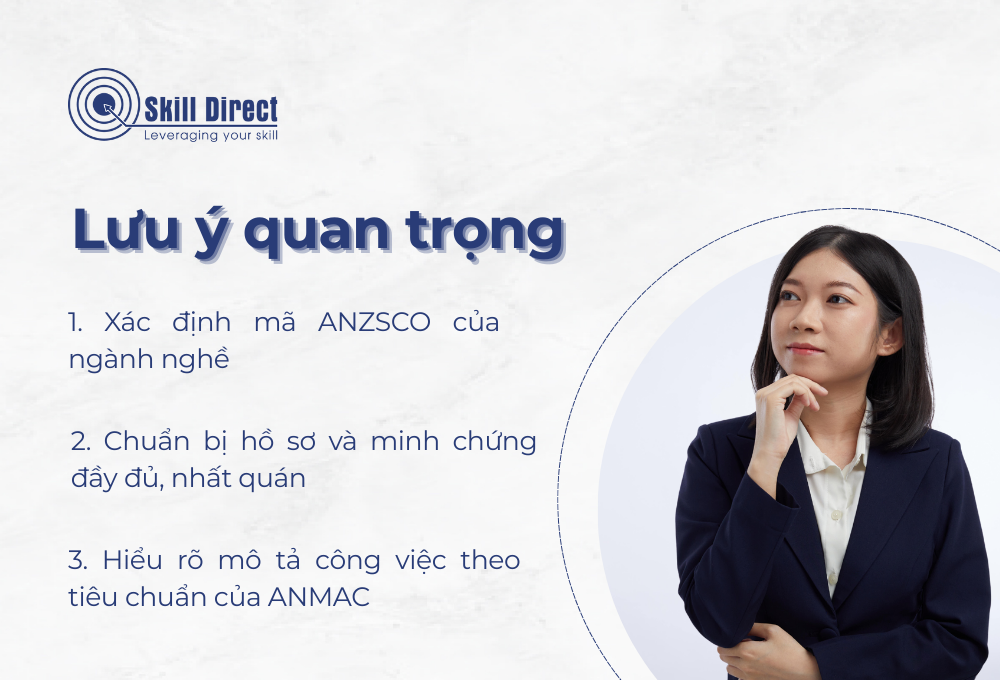
- Select the correct ANZSCO occupation: Choosing the wrong ANZSCO code may affect how ANMAC evaluates your duties and occupational suitability.
- Ensure your evidence is complete and consistent: Prepare comprehensive documentation, including qualifications, transcripts, registration certificates, employment references, job descriptions, employment contracts, payslips, and supporting evidence. Consistency across all documents can significantly improve processing efficiency.
- Understand ANMAC's expectations regarding nursing duties: Your practical experience should closely align with the responsibilities expected of your nominated occupation. This alignment is one of the most important factors influencing your assessment outcome.
ANMAC Skills Assessment is a mandatory and decisive step for anyone planning to migrate to Australia as a nurse. Preparing your application correctly from the outset can significantly improve the efficiency and success of the assessment process. If you require assistance optimising your documentation or navigating complex situations involving employment evidence and supporting documents, Skill Direct is ready to guide you through every stage of the journey.


