




EA Skills Assessment is one of the first things Vietnamese engineers aspiring to migrate to Australia need to understand and complete as part of their migration strategy. But do you know how much you really need to understand about EA Skills Assessment before getting started? Skill Direct will walk you through everything you need to know in this article.
1. Understanding EA Skills Assessment: The Key to Australian Migration for Engineers
Migrating to Australia has long been a major goal for many talented Vietnamese engineers. To turn this dream into reality, one of the most important gateways you must pass through is the EA Skills Assessment. This is not merely a mandatory administrative requirement before lodging an Expression of Interest (EOI) and progressing towards a skilled visa application. It is also formal evidence demonstrating that your qualifications, professional experience, and competencies meet Australian engineering standards.
1.1 What Is EA Skills Assessment?
Engineers Australia (EA) is the designated assessing authority authorised by the Australian Government to conduct skills assessments for engineering occupations. EA skills assessment is the process through which Engineers Australia evaluates your qualifications, work experience, and engineering competencies to determine which occupational category you belong to: Professional Engineer, Engineering Technologist, Engineering Associate, Engineering Manager
Beyond simply reviewing documents, EA Skills Assessment serves as a benchmark of professional standards. Its objective is to identify candidates who possess strong technical capability, uphold professional ethics, and can make meaningful contributions to Australia's development..
1.2 Engineering Occupations That Require EA Skills Assessment
Engineers Australia recognises four occupational categories aligned While these categories generally require engineering qualifications equivalent to Australian standards under the Australian Qualifications Framework (AQF), each represents a distinct scope of practice and level of expertise.
- Engineering Associate
This category is suited to individuals who enjoy practical and support-oriented work. Engineering Associates provide technical support to engineers and technologists by assisting in the preparation, coordination, and operation of engineering processes, helping transform ideas into tangible products and solutions. - Engineering Technologist
This category includes engineers across various disciplines such as Mechanical, Chemical, Electrical, Electronic, and other engineering fields. Engineering Technologists typically focus on applying existing technologies to improve, optimise, and implement practical engineering solutions. - Professional Engineer
Professional Engineers are responsible for major engineering projects and programs. They provide technical leadership, solve complex engineering problems, and ensure engineering solutions meet the highest professional standards. - Engineering Manager
This category is designed for engineers with leadership and strategic planning capabilities. Engineering Managers combine technical expertise with management skills, leading teams, making critical engineering decisions, and aligning technological initiatives with business objectives.
Professional Engineer

Within each category, there are numerous occupations available. To determine which category applies to your occupation, you should refer to the Occupation List published on the Engineers Australia website before commencing your EA Skills Assessment.
2. EA Skills Assessment Pathways
Engineers Australia offers multiple assessment pathways designed to accommodate different educational backgrounds and professional experiences. Choosing the correct pathway is the first step towards ensuring a smooth assessment process.
2.1 Accredited Qualifications Pathway
If your qualifications are recognised under international agreements to which Australia is a signatory, you may apply through the Accredited Qualifications Pathway. These agreements include:
- Washington Accord
- Dublin Accord
- Sydney Accord
In addition, if you graduated from an Australian institution with an EA-accredited engineering program, you may also be eligible under this pathway.
Under the Accredited Qualifications Pathway, the assessment process is generally faster and more straightforward because you are not required to prepare a Competency Demonstration Report (CDR). Instead, Engineers Australia relies on recognised qualification frameworks to verify your competencies without requiring detailed evidence of professional experience.
2.2 Competency Demonstration Report (CDR) Pathway
You will need to apply through the CDR (Competency Demonstration Report) pathway if:
- Your Australian or overseas engineering qualification is not accredited under the Australian Qualifications framework, the Washington Accord, Sydney Accord, or Dublin Accord; or
- Your undergraduate qualification is not recognised,but you hold a Master's degree or PhD in engineering and possess substantial professional experience demonstrating competency equivalent to Australian engineering standards.
For these applicants, EA Skills Assessment requires evidence of engineering competence through a CDR application. This pathway is generally more time-consuming and demanding because it requires applicants to compile comprehensive evidence demonstrating their professional capabilities.
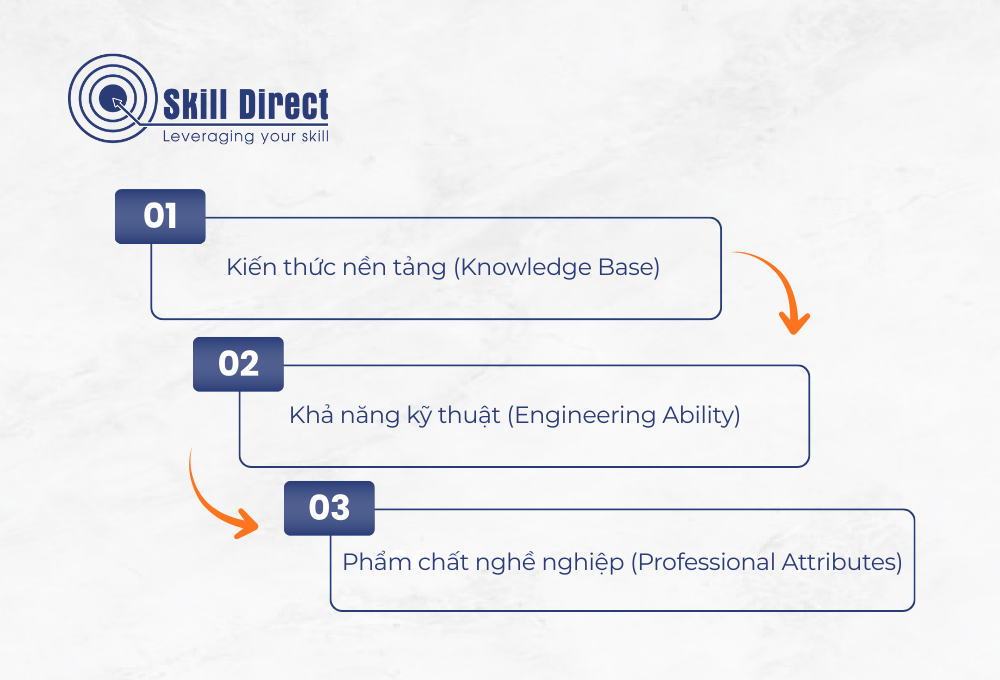
A complete CDR consists of three key componentsthat allow Engineers Australia to conduct a holistic assessment of your competencies.
- Knowledge Base
Engineers Australia assesses your understanding of fundamental engineering principles and core technical knowledge. They evaluate the depth of your expertise, your understanding of the discipline you are applying under, and your knowledge of engineering technologies, standards, and safety requirements. - Engineering Ability
This is often considered the most critical component, as it demonstrates your ability to apply engineering knowledge in practice. Through your Career Episodes and project descriptions, Engineers Australia assesses how you solve problems, apply engineering judgement, contribute to projects, and manage technical risks. This component provides insight into what you can actually do as an engineer and the extent of your professional experience. - Professional Attributes
Finally, Engineers Australia evaluates the professional qualities demonstrated throughout your career. These include professional ethics, compliance with engineering standards, communication skills, teamwork and leadership capabilities. Your commitment to continuous learning, professional development, and adaptability in a rapidly changing world is also taken into consideration.
In summary, the CDR pathway requires you to clearly demonstrate your knowledge, competencies, and professional attributes in accordance with Australian engineering standards.
3. Strengths and Opportunities for Vietnamese Engineers Undertaking EA Skills Assessment
Vietnamese engineers have long been recognised for their technical competence and engineering mindset. One notable example is NVIDIA, one of the world's leading semiconductor companies, where a significant proportion of the workforce consists of Vietnamese professionals. This reflects the reality that Vietnamese engineers are capable of meeting demanding international standards—including those required by Australia's skills assessment process.
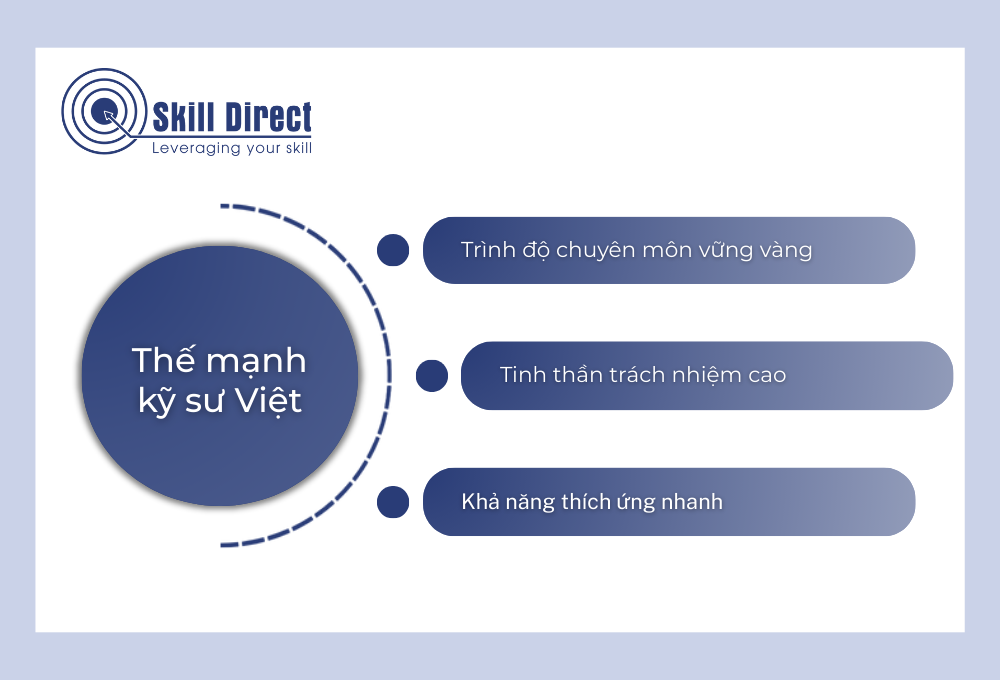
One of the greatest strengths of Vietnamese engineers trình độ chuyên môn vững vànglies in their solid technical foundations, built through rigorous academic training and diverse practical experience. If you have worked on domestic or international projects, you have likely developed analytical thinking, structured execution skills, and effective problem-solving abilities—qualities highly valued by Engineers Australia.
Vietnamese engineers are also well known for their strong sense of responsibility.Attention to detail, accuracy, diligence, and a proactive attitude towards learning are qualities that align closely with the systematic standards expected by Engineers Australia and can significantly strengthen your application.
Another major advantage is adaptability.Vietnamese engineers often demonstrate the ability to learn new technologies, embrace new processes, and integrate quickly into international working environments. This adaptability not only supports success in the EA Skills Assessment process but can also leave a strong impression on future Australian employers.
4. What Should Vietnamese Engineers Prepare to Get It Right From the Start?
To ensure every step of your application process is accurate and efficient, you should equip yourself with the right knowledge and strategy before beginning your EA Skills Assessment journey.
4.1 Understand EA Requirements Before Writing Your CDR
As mentioned earlier, preparing a CDR requires considerable time, focus, and effort. Understanding exactly what Engineers Australia expects will help you avoid unnecessary content, save time, and present information more effectively.
One common mistake is attempting to showcase every aspect of one's career experience. As a result, Career Episodes often become excessively lengthy and lose focus. In practice, an effective Career Episode generally ranges between 1,000 and 2,500 words, focusing on: Your individual role; The engineering problems you addressed; and how you applied your technical knowledge to solve them.
Besides the word count, you also need to understand the structure required by EA. Understanding the correct CDR structure will save you time and effort in completing the task.
A Career Episode typically consists of four sections:
- Introduction: Provide details of the project, including project title, dates, organisation or institution involved; and course name and supervisor information for academic projects.
- Background: Describe the nature of the project, its objectives and scope, and your engineering responsibilities.
- Personal Engineering Activity: Explain in detail your analyses and calculations; technical decisions made; engineering methodologies adopted; and any supporting diagrams, figures, or tables relevant to your contribution.
- Summary: What you accomplished; Lessons learned; and how the experience contributed to your professional growth.
For academic projects, course details and supervisor information should be included. For workplace projects, supporting evidence such as reference letters signed by supervisors, managers, or authorised HR representatives should be provided. Group projects are also acceptable.
However, you must clearly distinguish your own responsibilities, technical contributions, and outcomes. EA Skills Assessment evaluates what you personally accomplished, not what the team achieved collectively.
Understanding these requirements before writing your CDR will help you prepare a focused, persuasive, and well-structured application.
4.2 Learn From Common Mistakes
Many Vietnamese engineers encounter avoidable mistakes during the EA Skills Assessment process, particularly under the CDR pathway. Understanding these common pitfalls can help you minimise risks and strengthen your application.
- Reusing group project reports previously submitted by others: Although group projects are permitted, you must clearly identify your personal contributions. Using another team member's calculations, drawings, or work without proper attribution may significantly weaken your application.
- Using unauthorised sources: Engineers Australia places a strong emphasis on originality. All content included in your CDR should genuinely reflect your own experience. Where references are used, they must be appropriately cited. Any evidence of plagiarism, template misuse, or unauthorised assistance may result in immediate rejection.
- Self-plagiarism: This issue commonly affects applicants who have published academic papers. Although the work is originally theirs, copying published content directly into Career Episodes without rewriting it in a personal context is not acceptable. Engineers Australia expects Career Episodes to be written specifically for the CDR application.
- Insufficient engineering coursework: EA Skills Assessment does not assess Career Episodes in isolation. Engineers Australia also reviews whether your undergraduate studies included sufficient engineering content relevant to your nominated occupation. You should therefore ensure your academic records adequately demonstrate that you have completed the required engineering subjects.
Avoiding these common mistakes can significantly improve your chances of receiving a positive EA Skills Assessment outcome.

4.3 Seek Professional Support
Preparing an EA Skills Assessment application can be complex and requires in-depth understanding of both Australian engineering standards and migration requirements. Working with experienced migration professionals can make the process more manageable and effective.
So, Skill Direct How can they assist you?
- Skill Direct can assess whether your profile is suitable and advise you on selecting the most appropriate ANZSCO occupation and assessment pathway based on your career objectives.
- Skill Direct can guide and support you throughout the CDR preparation process, helping ensure your Career Episodes are structured logically, professionally written, and aligned with Engineers Australia's expectations
The pathway for Vietnamese engineers to Australia becomes much smoother when you understand and commence your EA Skills Assessment early. Opportunities favour those who are well prepared for invitation rounds. Let Skill Direct accompany you on your migration journey.
