




Receiving a negative outcome from VETASSESS is undoubtedly not something any applicant hopes for after lodging a skills assessment application. However, if you find yourself in this situation, it is important to remain calm and view it as an opportunity to review your application more carefully and strategically.
In this article, Skill Direct will help you understand the VETASSESS review and appeal process, as well as the key steps involved in lodging an appeal accurately, effectively, and in accordance with the relevant requirements.
1. Understanding VETASSESS and the Role of an Appeal
Understanding the VETASSESS assessment process and the requirements of your nominated occupation from the outset is essential to ensuring that your Australian migration journey stays on the right track, helping you avoid unnecessary delays, costs, and effort.
1.1 Why are Skills Assessment results important in immigration applications?
If you intend to migrate to Australia and pursue employment opportunities, you will generally be required to undergo a skills assessment. Through this process, the Department of Home Affairs determines whether your qualifications and employment experience align with your nominated occupation for migration purposes.
If you receive a positive outcome, you may proceed with the next stages of your migration pathway. Conversely, a negative outcome may require you to pause your plans and reassess your options before moving forward.
1.2 The Role ofa VETASSESS Appeal
Preparing a VETASSESS application often requires a substantial investment of time and effort to compile evidence demonstrating your qualifications and employment experience. However, even applicants with extensive professional experience may receive a negative outcome if the supporting evidence provided is insufficient or fails to adequately substantiate their claims.
If you disagree with the assessment outcome, you may consider lodging a VETASSESS appeal. This process provides an opportunity to request that your application be reconsidered. When approached strategically and supported by appropriate evidence and reasoning, an appeal may overturn the original decision, saving you from having to recommence the entire assessment process.
2. When Should You Pursue a VETASSESS Appeal?
Among Australia's designated assessing authorities, VETASSESS assesses a broad range of professional and trade occupations. If your skills assessment application receives a negative outcome, one of the most important steps is to carefully review your circumstances and determine the most appropriate time to seek a reconsideration of the decision.
a) Professional Occupations
Review of assessment outcome: may be requested within 90 days of receiving a negative outcome if you believe that the decision does not accurately reflect the merits of your application. During this process, the information originally submitted with your application is reassessed by VETASSESS. The purpose of the review is to examine whether the evidence provided was assessed appropriately and whether the outcome accurately reflects the information available.
The review process focuses on verifying the completeness, accuracy, and relevance of the information submitted. During this stage, applicants are generally permitted to provide additional evidence or supporting documentation to clarify their employment experience, educational qualifications, or the relevance of their background to the nominated occupation..
The estimated processing time for a review is approximately seven weeks. However, more complex cases may require a longer assessment period. Accordingly, preparing comprehensive documentation and responding promptly to any requests for further information may help minimise delays and improve the likelihood of achieving a positive outcome.
Appeal: If the outcome remains unchanged following the review process, you may consider lodging an Appeal. At this stage, the application is reviewed at a higher level, and in certain circumstances VETASSESS may seek advice from an independent expert to ensure that the reassessment process is objective and impartial.
It is important to note that applicants are not permitted to submit new evidence during the Appeal process. Rather than reassessing newly provided information, the Appeal focuses on reviewing whether the reasoning, methodology, and procedures adopted during the previous assessment stages were appropriate and correctly applied. The Appeal process generally takes approximately 12 weeks to complete, and the outcome of this stage will often determine the next course of action in your migration journey.
However, pursuing a Review or Appeal is not always the most suitable option following a negative outcome. In some circumstances, a Reassessment may provide a more advantageous pathway. A Reassessment is generally appropriate where you wish to nominate a different occupation or where the 90-day period for lodging a Review has already expired.
During a Reassessment, applicants cannot alter information previously declared in their application. However, they may submit additional qualifications, updated documentation, or newly obtained evidence to support their case. In practice, a Reassessment can be viewed as an opportunity to effectively refresh your application and strengthen the overall presentation of your claims.
This approach may be particularly beneficial where the original application contained significant gaps, failed to satisfy the relevant assessment criteria, or required substantial clarification and restructuring. Because the Appeal process does not permit the submission of new evidence, a Reassessment may sometimes represent the more practical and effective option where extensive updates to the application are necessary.
Overall, whether you pursue a Review, Appeal, or Reassessment will depend largely on the strength and completeness of your original application. Understanding the purpose of each pathway and knowing when to utilise them can help minimise unnecessary costs and delays while maximising your prospects of achieving a positive outcome.
b) Trade Occupations
VETASSESS is one of the organisations authorised by Trades Recognition Australia (TRA) to conduct skills assessments for certain trade occupations under the Offshore Skills Assessment Program (OSAP) and the Temporary Skill Shortage (TSS) program. Accordingly, the process for seeking reconsideration of a negative outcome in these cases is governed by the policies and requirements established by TRA.

3. VETASSESS Appeal Policy
The purpose of this policy is to enable VETASSESS to manage and respond effectively to requests for reconsideration, including Reviews and Appeals, lodged by applicants. It also helps applicants understand each stage of the process, ensuring that requests are submitted in accordance with the relevant requirements and that applications are assessed fairly and transparently.
3.1 Appeal Process
VETASSESS Appeal is designed to provide applicants with an opportunity to challenge the outcome of a skills assessment where they believe that the original decision did not accurately reflect their qualifications and experience.
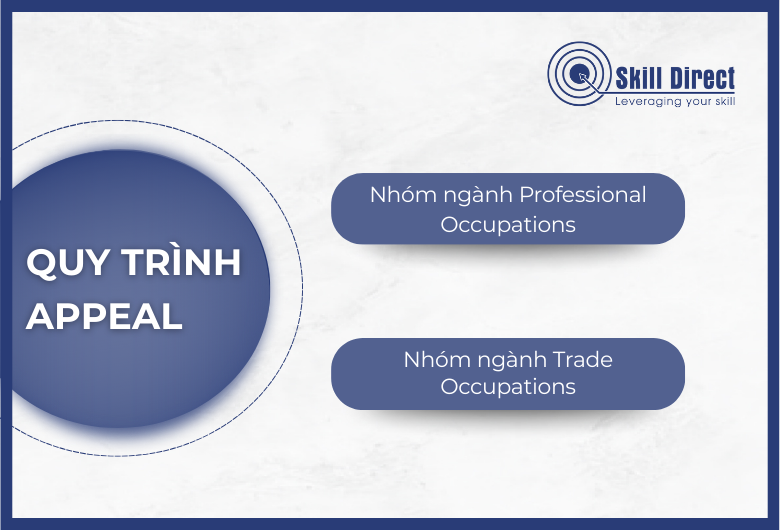
Depending on the assessment pathway undertaken, the appeal process may vary.
- For Professional Occupations
Step 1: Lodge an Appeal Application
You must lodge an Appeal within 90 days of receiving a negative outcome following the completion of the Review process.
Step 2: Acknowledgement of Receipt
VETASSESS will send you an email confirming that your Appeal application has been received..
Step 3: Independent Reassessment
An independent assessor who was not involved in the original assessment process will be appointed to review all information and documentation previously submitted, including any additional evidence accepted during the Review stage.
Step 4: Outcome Notification
Appeals are generally processed within approximately 12 weeks. The outcome will be communicated to you via email.
If the decision is overturned and your assessment outcome changes from negative to positive, the Appeal fee will be refund.
Step 5: Further Communication (if required)
If you have any concerns or require clarification after receiving the Appeal outcome, you may contact VETASSESS directly for further explanation and assistance.
- For Trade Occupations Assessed Under the TSS, OSAP and ATCS Skills Assessment Programs
Step 1: Lodge an Appeal Application
You must submit your Appeal within seven days of receiving a "not successful" outcome. The applicable Appeal fee must be paid directly to Trades Recognition Australia (TRA) through the relevant online payment system.
Step 2: Acknowledgement of Receipt
Within two business days, VETASSESS will acknowledge receipt of your Appeal application via email.
Step 3: Independent Reassessment
An independent assessor who was not involved in the original assessment will be appointed to review all information and documentation previously submitted, including any supplementary evidence accepted under the relevant program requirements.
Step 4: Outcome Notification
The Appeal outcome will be issued to you by email. If the original negative outcome is overturned and replaced with a positive result, the Appeal fee will be refunded.
Step 5: Further Communication (if required)
If you remain dissatisfied with the outcome, you may contact VETASSESS directly to seek further clarification regarding the decision.
Overall, understanding the VETASSESS Appeal process allows applicants to take a proactive approach to managing their applications, comply with the applicable timeframes, and maximise their chances of obtaining a favourable outcome.
3.2 VETASSESS Appeal Application Form
The VETASSESS Appeal application form is available on the official VETASSESS website. Applicants may download the relevant form, complete the required details, and submit it within the prescribed timeframe to request a reconsideration of their skills assessment outcome.
However, before lodging an Appeal, VETASSESS recommends that applicants first communicate directly with the assessing authority or their authorised representative to gain a clear understanding of the reasons for the negative outcome. This is because, once an Appeal has been lodged, applicants are generally unable to change their nominated occupation or submit any new supporting evidence or documentation.
Accordingly, it is essential to fully understand the reasons behind the original decision and carefully assess whether there are sufficient grounds to justify an Appeal.
When completing the Appeal application form, you will need to identify the assessment pathway to which the Appeal relates,, including:
- Full Skills Assessment
- Points Test Advice only
- Qualification Assessment for 485 visa purposes
Following receipt of the application, VETASSESS will reassess the matter in accordance with its Appeal procedures. Importantly, the outcome of the Appeal represents the final decision within the VETASSESS internal review framework, and no further appeal mechanism is available through VETASSESS.
3.3 Fees VETASSESS Appeal
The VETASSESS Appeal fee varies depending on the applicant's residency status:
- Australian citizens and permanent residents: AUD 1,157.20
- Non-Australian citizens: AUD 1,082.00
The difference in fees reflects the inclusion of Goods and Services Tax (GST) for Australian citizens and permanent residents in accordance with Australian taxation requirements.
The Appeal fee must be paid in full at the time of lodgement. If the Appeal is successful and the outcome changes from negative to positive, the Appeal fee will be refunded. Given the significant cost involved, applicants should carefully evaluate the merits of their case and seek professional advice before proceeding with an Appeal to maximise their prospects of success.
4. What Is the Success Rate of a VETASSESS Appeal?
When considering a VETASSESS Appeal, many applicants naturally wish to know how likely it is that a negative outcome can be overturned. Understanding the realistic prospects of success can help applicants manage expectations and develop an appropriate strategy to strengthen their case.

4.1 How Is the Success Rate of a VETASSESS Appeal Determined?
In practice, there is no reliable method of accurately predicting whether an Appeal will result in a positive outcome. Each Appeal is assessed on its own merits and may undergo multiple levels of scrutiny before a final decision is reached.
Rather than focusing solely on the likelihood of success, applicants should carefully analyse the reasons for the negative outcome and develop an evidence-based strategy to address the issues identified. This approach is more likely to improve the strength of the submission while avoiding unnecessary costs and delays.
To assist with this process, Skill Direct's experienced team can help applicants identify the underlying reasons for a negative outcome through a comprehensive review of the assessment decision. Drawing on extensive experience with VETASSESS applications, our team can assess the strengths and weaknesses of your case, identify areas requiring improvement, and recommend the most appropriate course of action based on your individual circumstances and the reasons provided in the original assessment outcome. In addition, tailored strategic advice can help ensure that any Review, Appeal, or Reassessment is approached effectively and with a clear understanding of the available options.
4.2 Case of Successful Appeals
Through professional expertise and a commitment to delivering tailored solutions, Skill Direct has assisted numerous clients in achieving successful outcomes through the VETASSESS Appeal process, even after initially receiving a negative assessment outcome.
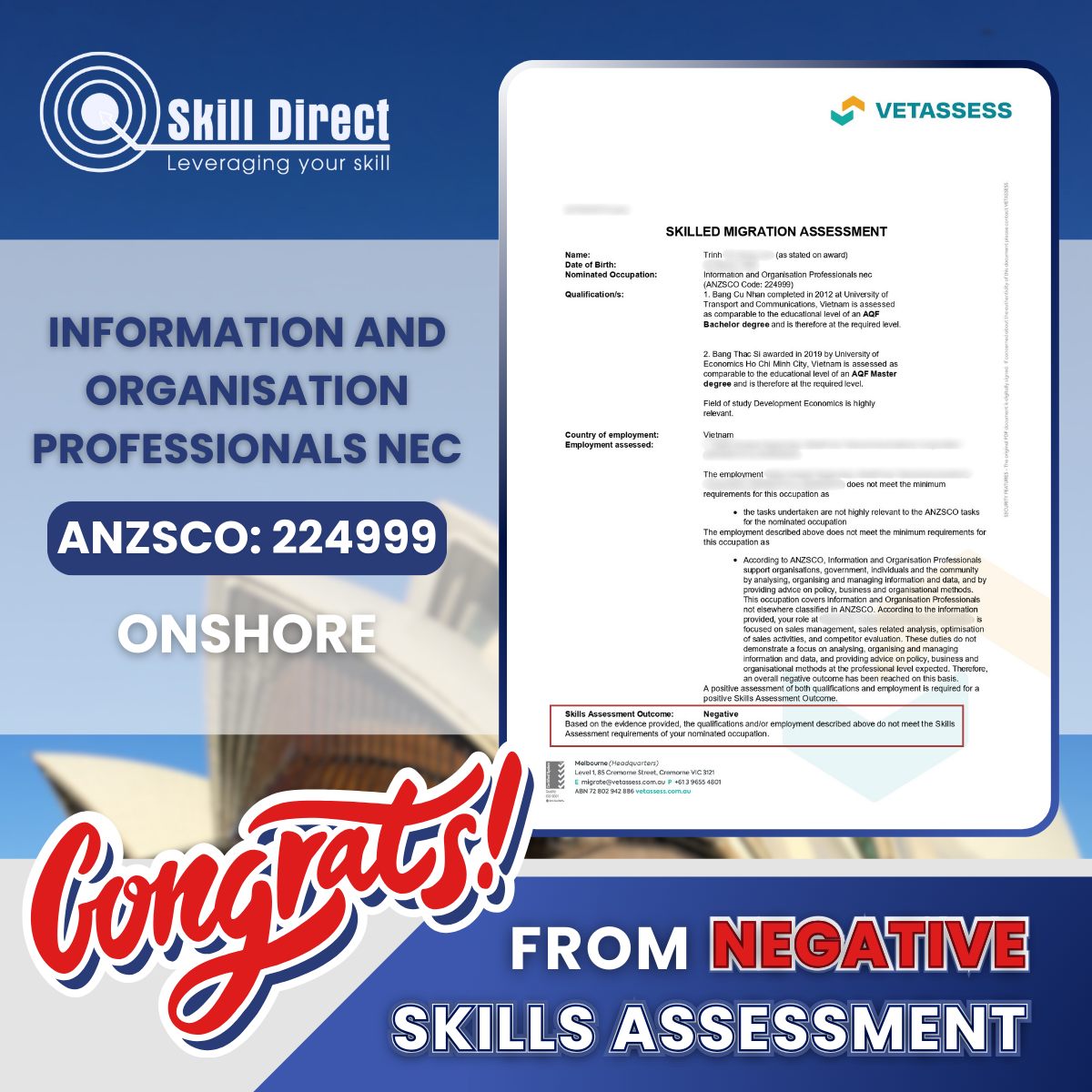
One example involved chị L, who lodged a Skills Assessment application for the occupation group Information and Organisation Professionals on 24 September 2024. On 14 November 2024, she received a negative outcome because VETASSESS considered that her role as a Sales Analyst Supervisor was primarily focused on managing sales operations rather than undertaking the analytical and organisational functions central to this occupational group.
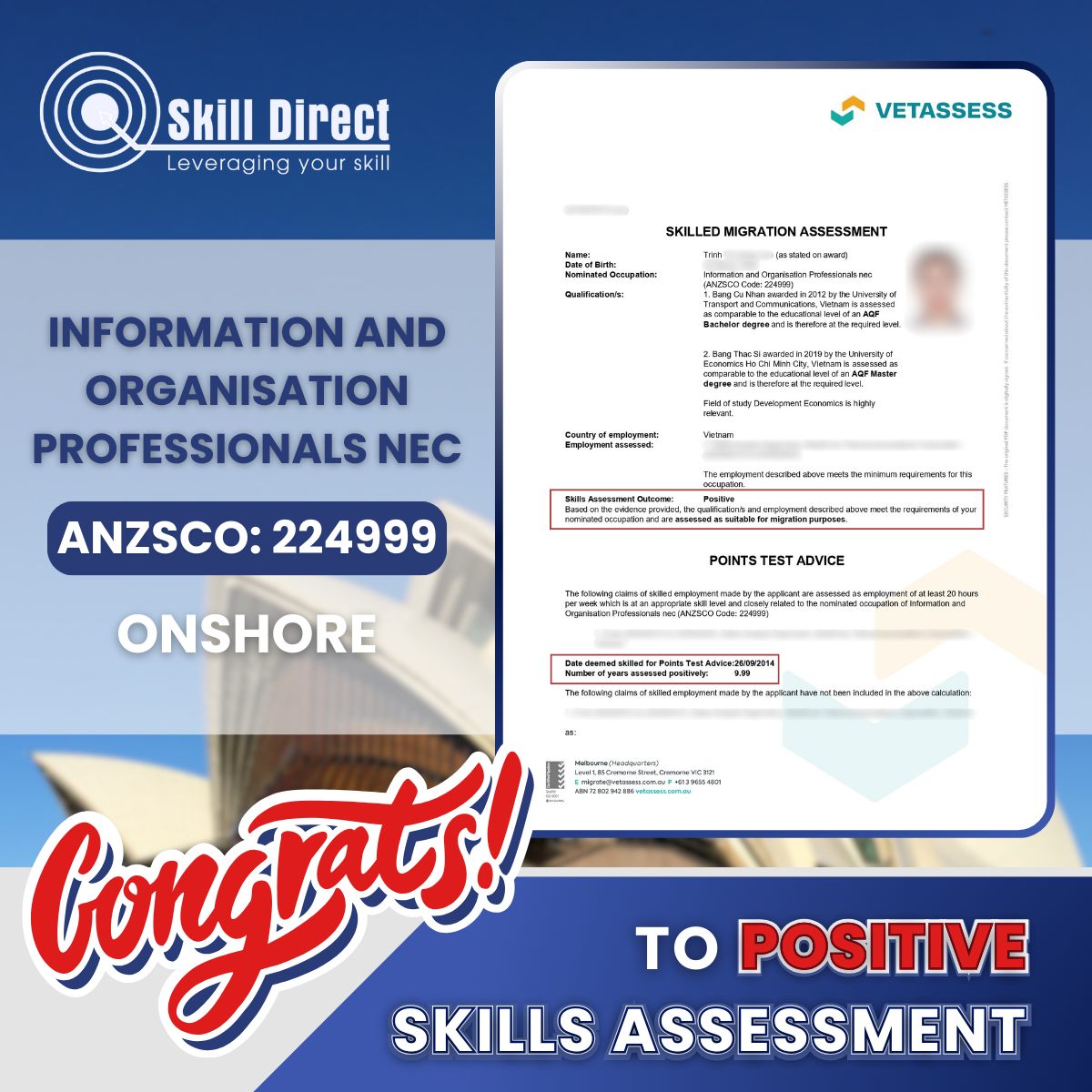
Following a detailed review of her application by the Skill Direct team, her employment duties were carefully assessed against the relevant ANZSCO criteria, and her employment evidence was strategically reorganised and clarified to better demonstrate the alignment between her experience and the nominated occupation. As a result, she subsequently received a Positive Outcome on 9 April 2025 under ANZSCO 224999.
This is just one example among many cases in which Skill Direct has successfully assisted clients in overturning negative outcomes through the Review and Appeal process. Each successful matter reflects the persistence of the applicant, the importance of presenting evidence strategically, and the value of obtaining experienced guidance when navigating complex skills assessment requirements.
If you have received a negative VETASSESS outcome and require assistance in determining the most appropriate next steps, contact Skill Direct for tailored advice and strategic support to help you move forward with confidence.


