




Skills Assessment is one of the first and most crucial steps in the Australian skilled migration journey. However, many applicants choose to wait until new migration allocations are announced before beginning their Skills Assessment. Is this a smart strategy, or could it unintentionally cost you valuable opportunities? Let's explore the answer with Skill Direct.
1. What You Need to Know About Allocation
To decide when you should undertake your Skills Assessment, you first need to understand what allocation actually means.
1.1 What Is Allocation?
In the context of Australian migration, allocation refers to the number of places or nomination quotas allocated each financial year for skilled migration programs.
The allocation process generally occurs at two levels:
Firstly, at the federal level:
The Australian government sets the total quota for the entire skilled migration program for the financial year. This serves as the basis for policy planning and adjusting strategies to attract domestic and international talent.
Secondly, at the state and territory level:
From the overall allocation, individual quotas are distributed to each state and territory, such as Victoria, New South Wales, Western Australia, and Tasmania. Once these allocations are received, each jurisdiction reviews its labour shortages and publishes its own priority occupation lists and nomination criteria.
In other words, allocation plays a significant role in determining which occupations receive more invitations and which become more restricted.As a result, it can directly influence your migration strategy.
1.2 When Are Allocations Announced?
There is no fixed timeframe for the announcement of skilled migration allocations during each financial year. After the Australian Government releases the migration planning levels, states and territories often require additional time to assess their workforce needs and finalise their nomination policies. Consequently, the opening dates for state nomination programs vary significantly between jurisdictions and financial years. Some states may even announce their programs much later, depending on economic conditions and actual labour market demands.
1.3 Factors That Influence Allocation
Allocation figures are neither fixed nor random. They are shaped by various economic and social factors affecting each state and territory. Key considerations include:
- Workforce priorities of each state and territory
Each jurisdiction has its own economic development agenda, resulting in different workforce demands. For example, some states prioritise engineering and construction occupations to support infrastructure development, while others focus more heavily on healthcare or education professionals. Consequently, nomination allocations for each occupation may vary depending on the state's priorities for that financial year. - Backlogs of applications from previous years
When a state faces a substantial backlog of applications, resources must first be directed towards processing those existing cases before accepting new ones. As a result, certain occupations may temporarily close or receive very limited nomination places, making the competition significantly more intense.
In summary, allocation is the outcome of a complex balancing process involving current labour shortages, future workforce planning, and the administrative capacity of each state or territory. Understanding these factors allows you to proactively plan your migration pathway rather than waiting passively for new quotas to be announced.
2. At What Stage Should You Complete Your Skills Assessment?
Because skilled migration allocations fluctuate from one financial year to another, it is impossible to predict exactly when your occupation will receive invitations, which state will open first, or whether invitation thresholds will increase or decrease. The uncertainty makes the timing of your Skills Assessment extremely important.

2.1 Why Should You Complete Your Skills Assessment Early?
There are many advantages to completing your Skills Assessment as early as possible. Once you have a positive Skills Assessment outcome, you become much more prepared and flexible throughout your migration journey. More importantly, you are ready to seize opportunities the moment either the federal government or a state opens its nomination program.
A practical example occurred during the 2025–26 program year. Shortly after the Australian Government announced the migration allocations on 4 November 2025, several states rapidly released their nomination programs. Notably, Victoria opened its application window for just one day. This demonstrated the highly competitive nature of the process. Applicants who had already obtained their Skills Assessment results were able to submit their applications immediately without losing precious time preparing documentation.
Completing your Skills Assessment early also helps minimise processing risks and reduces your exposure to unexpected policy changes. This has become increasingly important as states tighten their nomination requirements and prioritise applicants who are fully prepared.
If you would like to explore these benefits in greater detail, Skill Direct has previously analysed the strategic importance of Skills Assessment and its role in skilled migration planning.
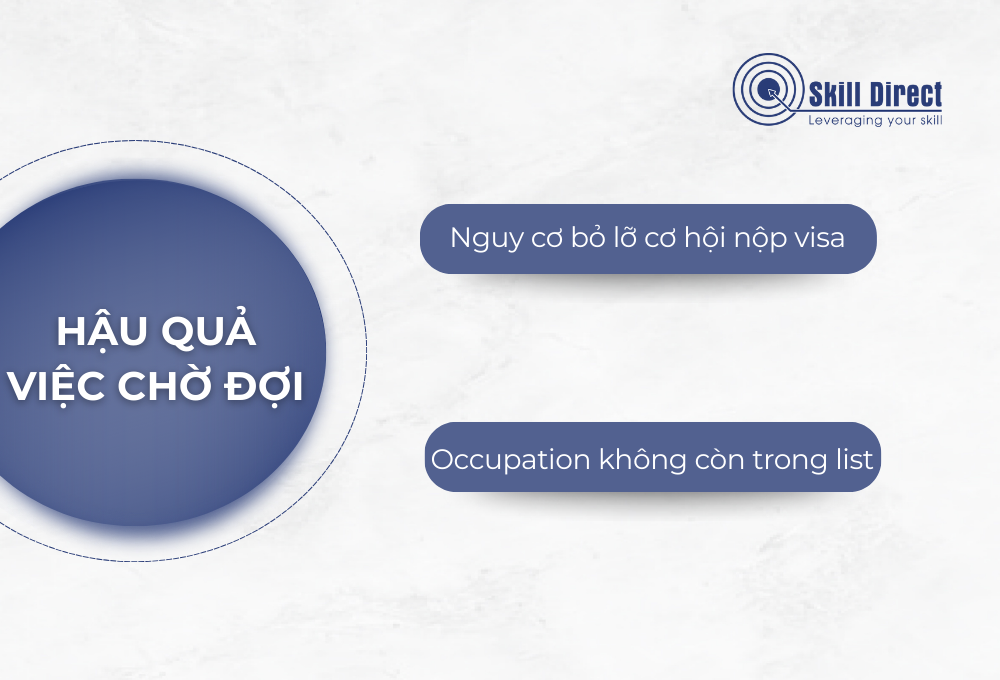
2.2 The Consequences of Waiting for Allocation Before Starting Your Skills Assessment
Delaying your Skills Assessment can have serious consequences and may directly jeopardise your Australian migration plans.
Missing visa application opportunities
SkillSelect invitation rounds can occur unexpectedly and do not necessarily follow a fixed schedule each year. Without a valid Skills Assessment, you cannot lodge an Expression of Interest (EOI). This means you are automatically excluded from receiving invitations, regardless of how competitive your points score may be.
Similarly, many states and territories only open their nomination programs for a short period and close applications once their quotas are reached. If your Skills Assessment is not ready, you will inevitably fall behind and may lose the opportunity to apply, particularly in high-demand occupations.
In other words, waiting for allocation announcements before commencing your Skills Assessment places you in a reactive position. A single delay could cost you an entire financial year's worth of opportunities. cả một năm tài chính.
Sudden policy changes may remove your occupation from the list
Priority occupation lists (Occupation List) are reviewed and adjusted periodically by Australian governments, especially around allocation announcements. These changes can occur rapidly and often without much warning.
If you postpone your Skills Assessment and your occupation is removed from the eligible occupation list, your migration pathway through that occupation could effectively disappear. mất toàn bộ cơ hội nộp hồ sơ theo ngành nghề đó.
However, if you already hold a valid Skills Assessment outcome, you will be ready to act immediately should your occupation return to the list, without needing additional time to prepare your assessment application.
3. How to Develop an Effective Skills Assessment Strategy
In any migration plan, having a clear strategy and contingency measures will help you stay proactive and maximise your chances of success. Below are several key steps to ensure your Skills Assessment preparation is as effective as possible.
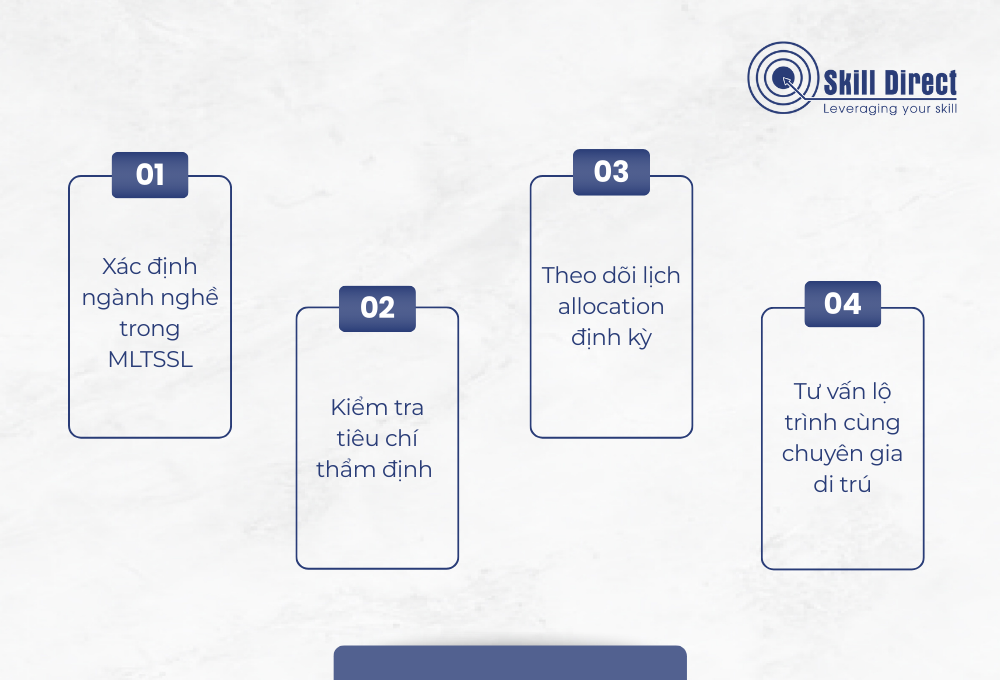
- Identify your occupation on the relevant occupation list: You should first determine which occupation aligns with your migration goals. Where possible, occupations listed on the Medium and Long-term Strategic Skills List (MLTSSL) are generally preferable, as they tend to offer more stable opportunities across multiple visa pathways. By contrast, occupations on the Short-term Skilled Occupation List (STSOL) may provide fewer options and can be more vulnerable to policy changes.
- Understand the assessment criteria of your assessing authority: Each occupation is assessed by a different assessing authority, and their requirements vary considerably.
For example, trade occupations assessed by Trades Recognition Australia (TRA) often involve practical competency assessments and technical interviews in addition to documentary evidence. In contrast, ICT occupations assessed by the Australian Computer Society (ACS) primarily focus on document-based assessments and rarely require direct technical interviews.
Understanding the specific requirements of your relevant assessing authority enables you to prepare the correct evidence, minimise unnecessary delays, and significantly improve processing efficiency.
- Stay informed about policy changes: Migration Program allocations are set for each financial year but may be supplemented during the year. Therefore, you should regularly check updates from the Department of Home Affairs and the official websites of each state and territory to stay informed of any changes and adjust your points strategy or choice of state nomination accordingly.
- Seek professional migration advice: Rather than navigating complex requirements alone, you may benefit from working with experienced migration professionals. At Skill Direct our team can help you build a structured migration pathway tailored to your circumstances. From preparing your Skills Assessment application to ensuring compliance with assessing authority requirements, professional guidance can help streamline the entire process and reduce avoidable mistakes.
With migration policies evolving rapidly, allocations changing regularly, and competition becoming increasingly intense, it is clear that waiting for new allocations before starting your Skills Assessment is rarely an effective strategy. Delaying this critical step only places you at a disadvantage, increases the risk of missed opportunities, and could potentially cost you an entire financial year simply because you were not ready.
Start your Skills Assessment today to stay prepared at every stage of your migration journey and gain a competitive advantage in achieving your Australian skilled migration goals.


