




The remote work trend is hotter than ever, and its momentum has only accelerated long after the pandemic era. However, a major question still leaves many applicants wondering: Can remote work experience be recognized when undergoing a Skills Assessment for Australia? Let’s explore the answers with Skill Direct.
1. An Overview of the Australian Skills Assessment
Skills Assessment (skills assessment) is a crucial step in your Australian migration pathway, as it verifies that your qualifications and skills meet Australian standards. The outcome determines your eligibility to submit an Expression of Interest (EOI) and apply for a skilled visa, particularly if your nominated occupation is included on the MLTSSL. It can also directly influence your overall migration strategy. Delays at this stage could set your migration plans back by an entire financial year.
Understanding the requirements and initiating your skills assessment as early as possible allows you to take control of your timeline, mitigate risks, and maximize your immigration opportunities.
2. Why Does Remote Experience Puan Raise Red Flags in Skills Assessments?
According to Tech.co's "2025 Report on the Impact of Technology on the Workplace," (Tech.co)AI and remote work trends are predicted to continue growing strongly. Survey results show that 35% of participants found remote work more flexible in terms of scheduling, and 20% reported significantly improved productivity. Furthermore, the “2024 Remote Work Stats & Trends Report” noted that 51% of workers desire a remote job, indicating that this work model is becoming increasingly popular and creating a trend of multinational work from home.
However, the very flexibility that makes remote work appealing can turn into a hurdle during an Australian skills assessment. When working remotely, professionals often balance diverse freelance projects or perform hybrid roles that do not fully align with their primary nominated occupation.
Additionally, remote workers frequently overlook formal administrative details—such as securing structured employment contracts, detailed job descriptions, official tax documents, or verifiable employer-employee verifications. When it comes to an Australian skills assessment, these items are mandatory evidence required to prove your employment history. Unfortunately, many candidates find themselves unable to provide a complete and compliant paper trail.
3. Is Remote Work Experience Officially Recognized?
Yes, your remote work experience can absolutely be recognized by Australian assessing authorities. However, the caveat is that you must provide a highly robust, comprehensive portfolio of evidence, ensuring that every document directly aligns with the specific occupation you are claiming.
3.1 Strict Criteria for Valid Remote Work Experience
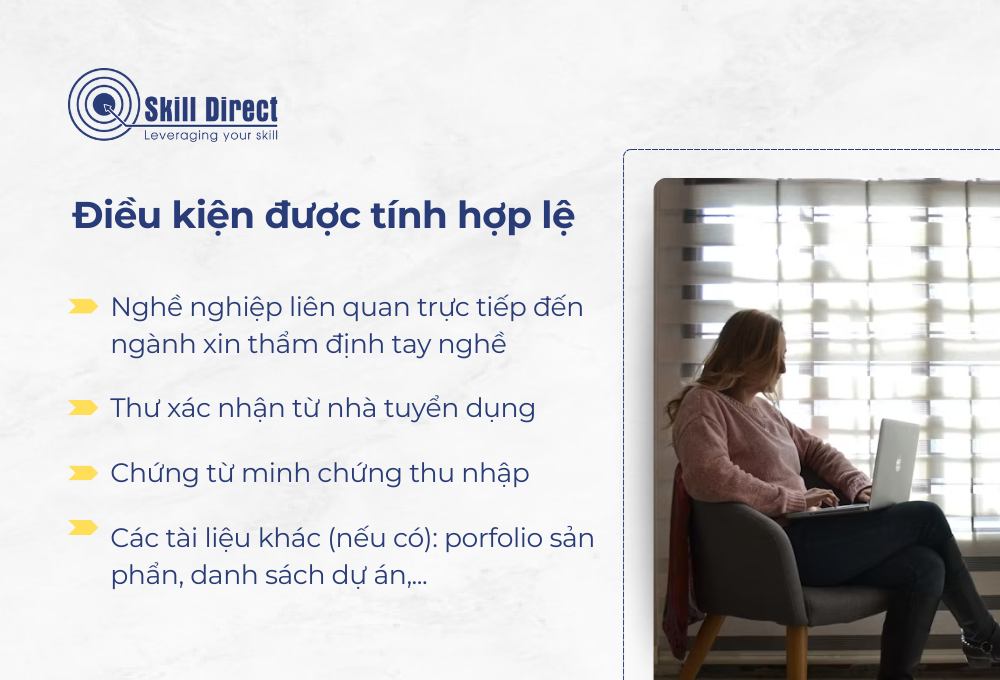
To ensure your remote employment is deemed valid, your application must satisfy the following core requirements:
Direct Alignment with the Nominated Occupation (ANZSCO Code):
he most critical factor is that your day-to-day remote duties must closely match the professional definition of your occupation in Australia. Assessing authorities evaluate the detailed task list in your references against the ANZSCO standard. As long as your actual responsibilities match the required skill level, the experience is valid—regardless of whether you worked from home or an office.
For example, if you're applying for a Software Engineer assessment, remote work such as programming, software testing, code review, feature development, system optimization, or project engineering management is acceptable. Conversely, if your tasks are purely administrative support or related to other areas, even if you've worked for a technology company for many years, this experience will not be accepted. Therefore, the issue isn't whether you worked from home or at the office, but whether you actually performed the tasks relevant to the assessment field.
Letters of recommendation are required:
An official Employment Reference Letter is the backbone of your assessment. The letter must explicitly detail your job title, exact employment dates, structural working hours (full-time or part-time), and a comprehensive breakdown of your daily responsibilities. Vague, generic descriptions or bullet points that are copied verbatim from online sources will result in a negative outcome.
Furthermore, the letter must be signed by an authorized supervisor, manager, or director. It must display the referee’s corporate contact details, including a verifiable company email address and phone number, allowing the assessing authority to conduct background checks. If the assessor cannot reach your referee, or if the contact information is unverified, your experience may be discounted.
Many applicants face issues when a former referee changes companies, disconnects their phone number, or when an unauthorized colleague signs on behalf of a manager. Transparency and verifiability are paramount.
Verifiable Financial Evidence of Income:
Skills assessments place particular emphasis on verifying whether you are actually receiving income from your remote work. The most common documents include monthly payslips, bank statements showing salary payments from the company, or tax documents.
The requirements vary depending on the assessment agency, but generally, they need to see consistency between your employment history and pay history. For example, if your confirmation letter states you worked from January to June, but your payslip only shows payments for two months, the assessment agency will request an explanation or additional evidence to clarify your income. If your company pays in cash, you will need to provide supporting documentation because assessment agencies are less likely to accept income without supporting documentation.
Supplementary Corroborative Evidence:
Because remote work lacks a physical office footprint, you must prove the continuity and reality of your employment. It is highly recommended to provide a formal employment contract specifying remote terms, a professional project portfolio, or evidence of your deliverables.
Additionally, company profiles, active websites, and business registration licenses help the assessor verify that your employer is a legally operating entity. While not mandatory, secondary evidence such as online meeting logs, task delegation emails, and internal communication threads can be submitted to reinforce the authenticity of your remote role.
3.2 Common Reasons Remote Experience is Rejected
Your remote work experience may still be rejected by the assessing authority if the evidence provided does not meet the required assessment criteria. One of the most common issues is insufficient detail in the employment documentation. If an employment reference merely lists job duties in broad terms without clearly demonstrating the specialised tasks you performed, the responsibilities you undertook, or how you applied your professional skills in practice, the assessing authority may not have sufficient evidence to recognise the claimed experience.
In addition, remote employment may be refused where the employer, referee, or company cannot be contacted for verification purposes,the business lacks a genuine and transparent operational presence, or the supporting evidence relies on unreliable personal email addresses rather than official business channels.
Another reason remote work experience may not be accepted is when the duties performed are not closely related to the nominated occupation being assessed.For this reason, ensuring that your work experience aligns with your nominated occupation and accurately reflects the relevant tasks and responsibilities is essential in any skills assessment application.
4. How to Maximize Your Success Rate for Remote Work Recognition?
Securing a positive skills assessment with remote experience is entirely achievable if you know how to structure your documentation according to Australian regulatory standards. Being proactive is the best way to safeguard your migration goals.

4.1 Meticulous Document Curation
The determining factor is how you collect and store your professional records from day one of your remote role. Every piece of evidence, no matter how small, helps build a logical, transparent, and compliant application. You need to ensure your confirmation letter clearly states your duties, job title, and working hours. Furthermore, you must submit bank statements that match the paycheck dates and supplementary documents such as a portfolio, assignment emails, etc. All of these elements will help the assessment body see a clear and consistent work history. A complete, logical, and consistent application will have a higher chance of being approved.
In addition to preparing a resume detailing work experience, some professions may require a technical interview during the evaluation process, so you should research this beforehand to prepare thoroughly.
4.2 Expert advice from migration specialists
According to immigration experts, when working remotely, you need to proactively prepare your application as clearly and completely as possible. You shouldn't wait until the application deadline to start gathering documents, as you could easily end up with missing documents, the certifying person no longer working, the company changing its information, or the bank unable to provide old statements.
Instead of preparing everything yourself, you can partner with an experienced agency like Skill Direct to receive support in checking the consistency of your application, quickly answering questions, and receiving specific guidance for each case. This not only helps you minimize the risk of being asked for additional documents but also increases the chances of having your remote work experience approved on your first application.


