




Working in Australia is a dream for many people, thanks to attractive income levels that can reach tens of thousands of dollars per year, international-standard employment benefits, and a high-quality living environment. However, behind those desirable numbers are significant pressures and challenges that workers may have to face every day. So, is the salary truly worth what you have to trade off? Let’s explore the reality of living and working in Australia with Skill Direct to find the answer.

1. Is Working in Australia as Easy as People Say?
Many people assume that working in Australia is easier and more comfortable than working in Vietnam. Since Australia is a developed country with modern machinery and advanced technology to support workers, many believe that jobs in Australia must be less physically demanding. However, in reality, the Australian labour market is highly performance-driven. This means that if you want to earn a high income, you must be prepared to put in the corresponding effort. Some of the key pressures you should be mentally prepared for when working in Australia include:
Pressure on productivity and work output
In Australia, workplace culture is highly practical and strongly focused on efficiency during every working hour. Employers generally expect workers to make full use of the time they are present at work. The working pace in Australia can be fast and continuous. For example, if you work in a factory or on a farm, you may often have to keep up with production lines or meet daily output targets. If you fail to meet KPIs or are seen as working too slowly, your shifts may be reduced or your employment may be ended, especially in casual roles.
Strict workplace procedures
In Australia, workers are expected to strictly follow workplace procedures and regulations in accordance with Australian standards.
These systems are designed to maximise worker safety and maintain a high standard of work quality. Each task usually comes with detailed instructions, from how to operate machinery and wear personal protective equipment to how different teams coordinate with one another. You are not allowed to skip steps or change work methods on your own, because even a small mistake can create safety risks, affect work quality, and delay the overall progress of the job.
Language and cultural pressure
Even with solid experience and skills, Vietnamese workers may still experience culture shock in the Australian workplace. Australians often speak quickly and use a lot of slang, which can make communication difficult at first. In a high-pressure work environment, failing to quickly understand instructions from colleagues or supervisors may lead to mistakes. Over time, this can not only create work-related pressure but also make you feel less confident when communicating.
In addition, Australian workplace culture values equality and encourages employees to be proactive and speak up directly. Meanwhile, Vietnamese workers are often more cautious and may avoid debate or confrontation. As a result, they may sometimes be misunderstood as lacking management capability or leadership potential.
2. Top 3 Industries with the Highest Work Pressure in Australia
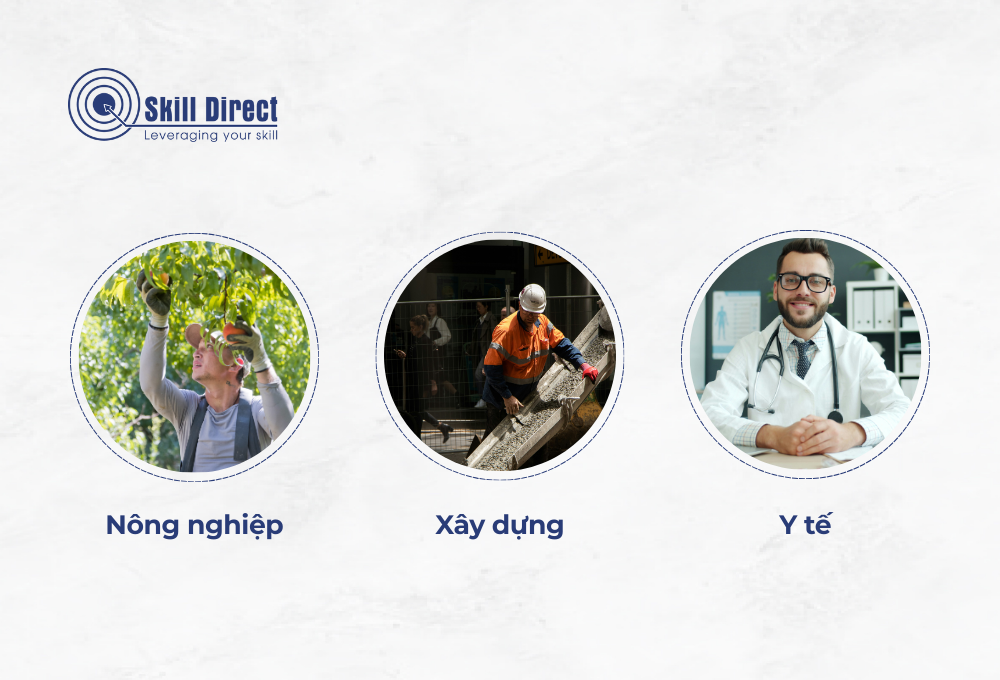
When it comes to working in Australia, Vietnamese workers often choose three main industry groups. However, these jobs generally require high work intensity and strong physical endurance.

2.1 Agriculture
Agriculture is one of the first sectors Skill Direct would like to highlight. Many people feel disappointed after working on farms in Australia because the reality is very different from the peaceful and romantic image of open fields that they once imagined. Once you begin the job, you will quickly realise this through the following challenges:
- Harsh weather: Australia has very high UV radiation due to its relatively thin ozone layer. In addition, the weather can be quite extreme. Outdoor workers may have to work under intense heat of up to 40°C, or in freezing cold conditions from 4–5am.
- Occupational health issues: Back pain, joint pain, and skin problems are common among farm workers. In addition, you may also face risks such as workplace accidents, insects, and wildlife.
- Limited career progression: Farm work is largely manual and repetitive. Therefore, opportunities to progress into management positions or build a long-term career in this field are often much more limited compared to other industries.
2.2 Construction
The construction industry always needs a large workforce, but it is also one of the most physically demanding sectors.
- Physical demands: Workers may have to carry heavy materials, climb structures, and operate high-powered machinery continuously.
- High risks: Although workplace safety is a top priority in Australia, construction remains an industry with a relatively high risk of accidents. The pressure to meet project deadlines while maintaining strict safety standards can create a significant mental burden for workers.
2.3 Healthcare
With a rapidly ageing population, Australia is facing a serious workforce shortage in the healthcare and aged care sectors. This industry may open up a migration pathway for many workers, but it can also be extremely demanding. Unlike farm work or construction, the pressure in healthcare is not mainly physical. Instead, it often comes from emotional and mental stress.
- Time and patient pressure: During each shift, a care worker may be responsible for several elderly residents or patients at the same time. The job may include assisting with bathing, feeding, personal hygiene, mobility, and monitoring health conditions — all of which must be completed according to a tight schedule.
- Shift work: Night shifts, weekends, and public holidays are common in this industry. Disrupted sleep patterns can have a long-term impact on health.
- Emotional burden: Healthcare and aged care workers often interact with patients who have dementia, declining health, or communication difficulties. This requires patience, emotional control, and strong mental resilience to maintain the quality of care over a long period of time.
3. Why Do Vietnamese Workers Still Choose to Work in Australia Despite the Challenges?
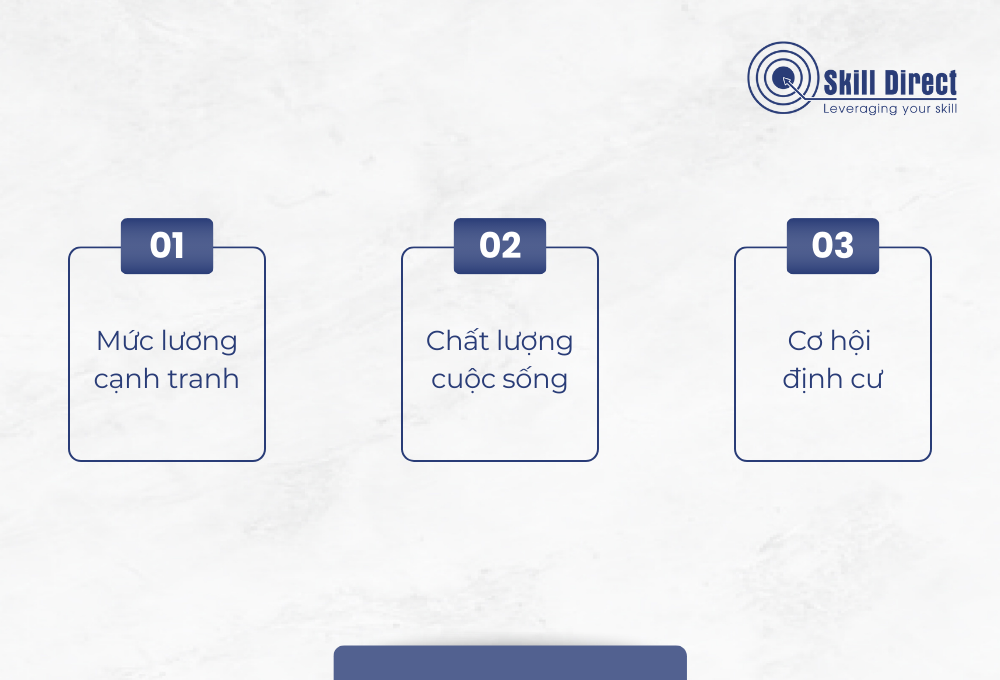
At this point, you may wonder: “If it is so difficult, why do thousands of people still try to find a way to move to Australia?” The answer lies in the rewards. Working in Australia is a fair exchange: the more effort you invest in getting here and the harder you work, the more opportunities and outcomes you may receive in return.
Competitive income
Income is one of the key reasons why many workers choose Australia.
- A realistic comparison: One hour of manual work in Australia, which may be equivalent to around VND 350,000–500,000, can equal a full day or even two days of income for a general worker in Vietnam.
- Savings potential: Although the cost of living in Australia is high, if you manage your spending wisely, you may be able to save a considerable amount after a few years. This can help support your family, pay off debts, build a house, or accumulate capital for future business plans if you return to Vietnam.
- Transparent pay and penalty rates: If you work overtime, night shifts, weekends, or public holidays, you may be paid at higher rates than your base wage. Depending on the industry, work schedule, and employment arrangement, your pay may be 1.5 times, 2 times, or even 2.5 times the ordinary rate..
Quality of life
Outside demanding working hours, life in Australia can offer valuable opportunities to recharge.
- Work-life balance: Once your shift ends, work truly stays behind at the workplace. You can enjoy meaningful time for yourself and your family, especially on weekends.
- Living environment: Clean air, safe food, beautiful natural landscapes, and a high-quality public healthcare system such asMedicareare benefits that can be difficult to find elsewhere.
- Respect for all occupations: In Australia, all jobs are respected. A construction worker or cleaner can still enjoy a decent standard of living and social respect comparable to office workers. You are not judged by the type of work you do.
Migration opportunities and a new future
For many people, working in Australia is not only about earning money. It is also about building a better future for the next generation. Australia has clear skilled migration pathways, including visas such as subclass 491, 189, and 190. Once you obtain permanent residency, you can not only build a long-term life in Australia, but your children may also access a high-quality public education system at low cost or with free tuition at school level, depending on the state and current regulations. At the same time, your family may also be able to access a range of social security and welfare benefits available to permanent residents.
Therefore, if you already have a long-term strategy, now is the time to start planning with Skill Direct experienced consultants. A well-prepared pathway can help turn your Australian migration dream into reality.
Working in Australia is not a path covered in roses. It is a path built on hard work, discipline, and your ability to adapt. If you only focus on the salary and ignore the real pressure behind it, you may quickly feel discouraged. However, if you see those challenges as a way to strengthen yourself and keep your eyes on the long-term goals of financial stability and a better future for your family, Australia may truly become the land of opportunity you are looking for.
